Introduction
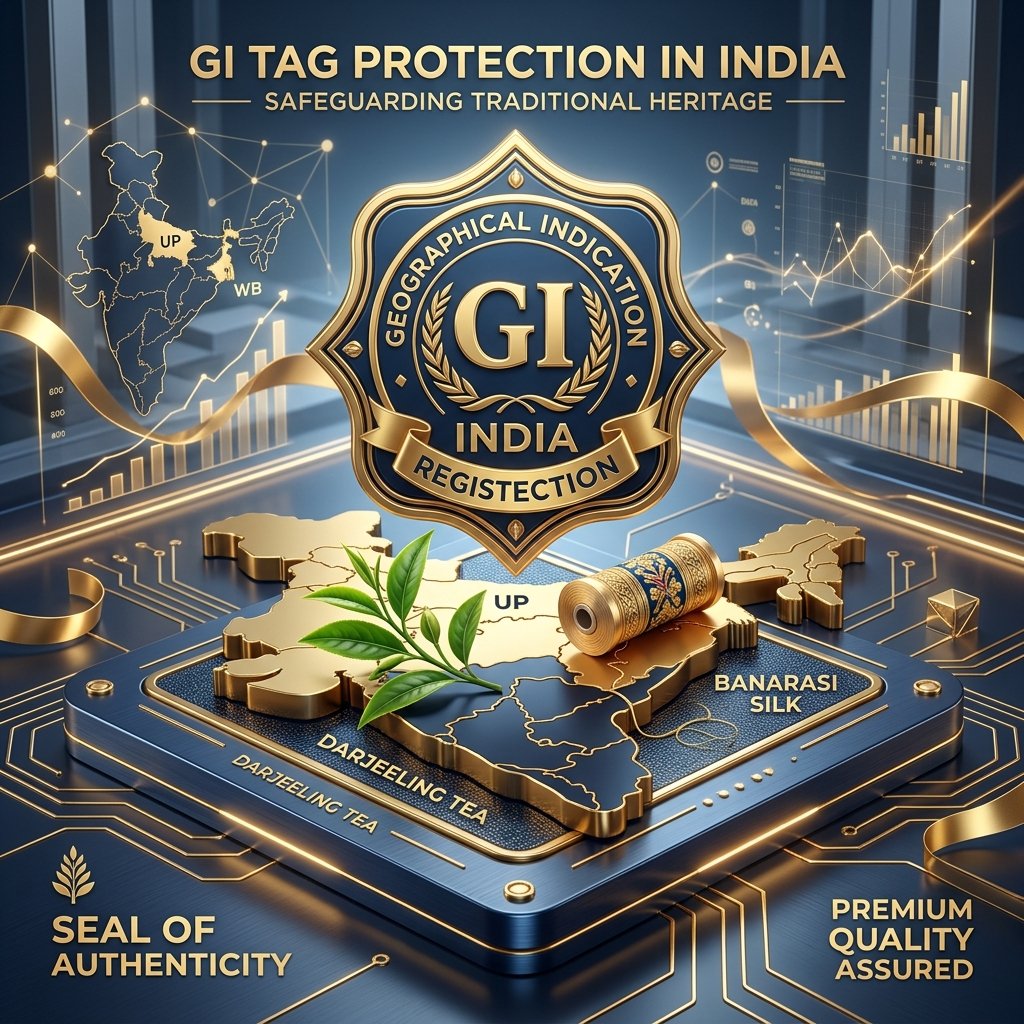
From Darjeeling Tea to Kanchipuram Silk, some products are known not just for their quality but also for the specific regions they come from. This unique connection between a product and its place of origin is protected through a Geographical Indication (GI) Tag.
In this article, we'll explore the legal meaning of GI Tags, their strategic benefits, eligible product categories, the Chennai GI Registry procedure, and notable state examples that showcase how GI protection preserves heritage, ensures consumer authenticity, and boosts local regional economies.
Meaning of Geographical Indications (GI)
According to the Geographical Indications of Goods (Registration and Protection) Act, 1999, a Geographical Indication (GI) is an official sign used to identify goods originating from a specific geographical territory, region, or locality, where a given quality, reputation, or other characteristic of the goods is essentially attributable to its geographical origin.
A GI Tag serves as a valuable intellectual property right that protects the unique identity of regional products and prevents unauthorized use by producers outside the designated area. It helps preserve the authenticity, reputation, and cultural significance of products that derive their distinctiveness from local natural resources, traditional knowledge, or specialized craftsmanship. By recognizing the link between a product and its origin, GI Tags also contribute to consumer trust, regional development, and the promotion of indigenous products in domestic and international markets.
Importance & Benefits of Geographical Indications
Protects traditional knowledge, generational craftsmanship, and production methods unique to a specific region.
Prevents unauthorized use, deceptive imitation, and misuse of the product's geographical name in commerce.
Increases the market value of regional products, generating premium pricing and higher income for local producers.
Creates sustainable employment opportunities and strengthens the livelihoods of rural artisans, farmers, and craftsmen.
Improves international market reputation and boosts export potential under global TRIPS/WTO frameworks.
Guarantees consumers that products originate from designated geographical areas and maintain certified quality.
Types of Products Eligible for GI Protection
Under the Geographical Indications of Goods Act, 1999, products generally fall into five distinct statutory categories:
1. Agricultural Products
Derive unique characteristics from regional microclimates, soil conditions, and traditional cultivation methods.
2. Handicrafts
Traditional products created using specialized skills and handloom artistry passed down through generations.
3. Food and Processed Products
Traditional culinary items, sweets, and processed foods closely associated with regional culture and recipes.
4. Natural Products
Mined or harvested natural materials possessing physical properties unique to geographical deposits.
5. Manufactured Goods
Manufactured products where production, processing, or local expertise is bound to a specific region.
Who Can Apply for GI Registration?
A GI application may be filed by an association of persons, producers, organization, or any authority established by law representing the collective interests of the producers of the concerned goods.
Key Principle: Collective Right
Because a GI protects collective regional reputation, it cannot ordinarily be registered by an individual in a personal capacity. After the primary GI registration is granted, individual artisans, farmers, and business owners in the region can apply to register as Authorised Users to obtain legal rights to market their goods with the official GI tag.
Registration Procedure of GI in India
The GI registration workflow is managed through the central Geographical Indications Registry in Chennai, Tamil Nadu:
Filing of Application
Submit the prescribed application to the GI Registry in Chennai with historical proof, technical specs, certified geographical regional maps, and affidavits demonstrating applicant representative capacity.
Preliminary Scrutiny & Expert Panel Examination
The Registry verifies statutory compliance and consults a specialized Expert Panel to confirm the nexus between product qualities and the territory.
Show Cause Proceedings
If objections arise during examination, a show cause notice is issued. The applicant can submit counter-arguments or appear for a personal hearing.
Publication in GI Journal
Accepted applications are advertised in the official Geographical Indications Journal to allow public inspection and third-party opposition.
Opposition Proceedings
Any person can file an opposition within 3 months (extendable by 1 month). Both parties file evidence and attend a hearing before the Registrar.
Registration & Certificate Issuance
If unopposed or decided in favor of the applicant, the GI is entered in the Register of Geographical Indications and a Registration Certificate is issued.
Registration of Authorised Users
Producers in the designated territory submit applications to be registered as Authorised Users, granting exclusive right to use the GI mark.
Duration & Renewal
Valid for 10 years from filing date. Can be renewed indefinitely for further 10-year terms upon payment of prescribed renewal fees.
Geographical Indications Across Indian States
The distribution of GI tags highlights India's immense cultural diversity. As of 2026:
Uttar Pradesh (70+ GIs)
Leads the country with famous registrations including Banarasi Silk, Lucknow Chikankari, and Kannauj Perfume.
Tamil Nadu (61–69 GIs)
Close runner-up with heritage registrations including Kanchipuram Silk, Madurai Malli, and Thanjavur Paintings.
Karnataka & Maharashtra
Host rich portfolios including Mysuru Silk, Coorg Cardamom, Kolhapuri Chappals, and Alphonso Mangoes.
Emerging States
North-Eastern and Eastern states are rapidly registering regional tea, handlooms, and agricultural specialties.
GI Infringement & Common Mistakes to Avoid
GI Infringement occurs when an unauthorized person or business uses a registered GI name for products originating outside the designated geographical area. Authorized users can file civil and criminal proceedings under the 1999 Act seeking injunctions, forfeiture, and damages.
Common Mistakes to Avoid During GI Registration:
Frequently Asked Questions (FAQs)
Conclusion
Geographical Indications (GIs) protect the unique identity, reputation, and qualities of products that originate from specific geographical regions. GI registration prevents unauthorized commercial misuse, preserves traditional cultural heritage, promotes regional economic growth, and guarantees authenticity for consumers. Securing GI status and Authorised User registration is an invaluable asset for regional producer associations and brand owners in India.
Need Guidance on GI Registration & Protection?
Protect your regional product heritage. CopyHart’s IP specialists assist producer associations, corporate entities, and authorised users with GI application drafting, evidence compilation, and Chennai Registry representation.